Complimentary Consultation

Dr. Daniel Cassarella

Thumb Sucking: 4 Insights for Parents

February 3rd, 2019

If you are parent to a child who has a thumb or finger habit, you are in good company. One study indicated that 15-20% of children under age 6 engage in thumb or finger sucking habits. Even orthodontists' children suck their thumbs! (See cover photo to see my daughter in action).

Below are 4 considerations for parents with a child who engages in thumb sucking. All of the following are evidence-based and established by clinical research, to help your child avoid dental health problems while building self-confidence associated with overcoming a challenging task.

Impact on Dental and Facial Growth and Development

After age 6 and with the corresponding eruption of the first permanent teeth, sucking habits will begin to have an irreversible negative effect on the development of the jaws, bite relationship, and positioning of teeth. In most cases, the habit will contribute specifically to a narrow upper jaw (causing crossbite), protruded upper teeth (overbite), and a failure of the front teeth to bite together properly (open bite).

Stopping By Age 6 or 7 Will Minimize Most Long Term Effects

In my experience as an orthodontist, I find that most children begin to establish social awareness of thumb sucking around age 5-6 and develop an internal motivation to cease the habit when it is observed that peers at school are not engaged in the habit. Fortunately for children and parents, this period coincides with the time in development at which irreversible negative effects can by prevented. Research has shown that cessation of thumb and finger habits prior to the eruption of the permanent incisors (central teeth) at age 6 or 7 will prevent lasting negative impacts on the development of the upper jaw and permanent teeth. This key age to stop also aligns with the American Association of Orthodontists' (AAO) recommended age for the initial evaluation of your child (age 7) by an orthodontic specialist.

Techniques for Stopping Thumb and Finger Sucking

The single most important aspect in helping a child to stop sucking a finger or thumb is to determine self-motivation. In the clinical setting, I typically begin by simply asking the child if he or she would like to stop the sucking habit. If your child is not ready and motivated, then it is not time to attempt to stop the habit. It will only lead to frustration and negativity. The focus, instead, should be on education. Explaining to your child how it would be helpful to them to stop and pointing out that others in their social group or class at school may be in the process of stopping. Acknowledging the difficulty in stopping is also very important. For example, if either parent had a sucking habit as a child, explain to your child how you recall how hard it was to stop, but how rewarded you felt once you were able to tackle the  difficult challenge.

Once established that the child is motivated, I recommend the following techniques to positively reinforce stopping the habit:

  1. Continuously reaffirm the child's self-motivation and goal to stop. Examples: "That is so great that you set this goal." and "You can do this, we are so proud of you."
  2. Set up a reminder system to help the child stop when the body may be unconsciously initiating the habit during sleep. This can include sleeping with glove or bandaid on the sucking hand and using nail polish on the sucking finger (Mavala Stop is one brand name).  The goal is not to physically prevent your child from performing the habit, but helping to provide reminders so they can willfully stop the habit in a positive, supportive environment. Positive reinforcement is the key.
  3. Use a reward calendar on the refrigerator. Every full day/night your child goes without engaging in the habit, place a star on the calendar. Arrange for a reward after 14 consecutive days are achieved without the habit. After 14 consecutive days, the chance of relapse of the habit is very small. (Link: I Can Do It Reward Chart)
  4. In many cases, early orthodontic intervention will help your child if he or she is actively engaged in a sucking habit over age 7. Most often, a constricted (narrow) upper arch and possible associated crossbite will indicate the need for a maxillary expander to orthopedically widen the upper jaw. In this case, this very common appliance will change the dynamics of the thumb habit just enough to serve as a reminder and aid the child in stopping the habit.

Consider the BIG PICTURE

Your child will overcome this habit. Your role as a parent is to educate, to motivate, and to provide a positive and supportive environment. Keep in mind that this may be the very first conscious, difficult sacrifice your child makes to improve his or her health and well-being. It must be our goal as adults (parents and healthcare providers alike) to foster self-motivation, encourage that little girl or boy that they are up to the challenge, and celebrate with them when they achieve what they set out to do. Comments like "how am I going to get him to stop" or  "she will never stop this" do little to motivate and will undermine the child's self-expectations. This habit should be looked at as a profound opportunity that can be used as a very important confidence builder for a young child. We adults must create an environment that encourages children in our sphere of influence to learn, to set goals, and to succeed- in thumb-sucking and beyond!!

The DCO Team is here to help you. Please email me at any time (info@dco-ortho.com) if I can provide any additional information to help you or your child.

Sports Mouthguards 101

June 11th, 2018

"Everybody has a plan until they get punched in the mouth." -Mike Tyson

(Montgomery County, PA)- Many parents ask whether their child in braces or Invisalign needs to wear a mouthguard while playing sports. Below are some guidelines to help you ensure your child's teeth are protected while playing sports.

Advantages of Mouthguards

  1. Cushion any forceful contact to the face, lips, or jaws to prevent injury
  2. Prevent teeth from being chipped, broken, or injured when heavy contact is sustained
  3. Evenly distribute force when contact is sustained to the mouth, lips, or teeth

Types of Mouthguards

  1. Custom Fit Mouthguards (the cream of the crop, best fitting and performing, made by your dentist or orthodontist)
  2. Orthodontic Mouthguards (designed to fit around braces, expanders, and other orthodontic appliances and to give teeth the freedom to move while still providing great protection)
  3. Boil and Bite Mouthguards (DIY at-home customization, gets the job done but may not fit as well and will be more bulky when compared to a custom fit mouthguard)

When should my child wear a mouthguard?

  1. Any sport or activity where forceful contact to the face could be sustained
  2. More obvious sports are: football, hockey, lacrosse, field hockey, boxing, martial arts
  3. Less obvious sports where facial injuries can occur but mouthguard wear is typically inconsistent and/or not required to be worn amongst players are: basketball, soccer, baseball, softball. In my practice, I have seen the highest amount of significant dental trauma stemming from basketball in instances where a mouthguard was not being worn
  4. If there is any chance for contact to the face or teeth, then a mouthguard = your best friend

If you have any questions about mouth protection or prevention of trauma while playing sports, please feel free to email me at info@dco-ortho.com. We are committed to helping you! I hope you found this short article helpful!

Wrestling: The Art of Self-Determination

February 23rd, 2018

"Never put the referee in a position to determine the outcome." -Coach Keith Maurer

The first step into the wrestling world for a beginning wrestler involves a soft, cushioned step as his toe hits the mat for the first time in the wrestling room. This brief comfort is quickly countered by a rush of warm air that hits the lungs and instantaneously conveys the level of intensity that will change the life and viewpoint of that young wrestler forever.  The wrestling room becomes the arena in which the mind and body will be tested, pushed, and challenged in ways the new wrestler never thought possible. Most athletes quickly realize the value of sports like wrestling in teaching the important ideals of goal-setting, determination, tenacity, leadership, and teamwork. Coaches, teammates, practices, pressure, success, and failure forever change the athlete who experiences them in the arena of competitive sports.

The most important lesson a wrestler learns is the power of self-determination, a sentiment of which is encapsulated in the opening quote by Coach Keith Maurer (current Hazleton Area High School Head Coach and Penn State Wrestling alumnus).  In fact, every coach who sat in my corner (my father, Chris Shaud, Joe DeLuca, Jeff Sweda, Dave Shafer, Joe Clifford, and many others) reinforced this value. When a match is won or lost, it is typically very clear which wrestler was able to impose his will during that match. In the very rare instances when a match is close and lost as a perceived result of a bad call by the referee, Coach Maurer's quote taught us that only one person is, in fact, responsible for allowing the match to be close in the first place.

The brand of self-determination crafted on the wrestling mat includes personal responsibility, ownership of success and failure, avoidance of excuses, and inspiration to never consider yourself a victim of circumstance. Continuous learning, focus on improvement, relentless hard work, reliance on teammates and mentors for support, and wrestling hard until the final whistle are powerful habits that are easily transferred and applied to the wrestling match of life.

Wrestling will teach the beginning wrestler mentioned previously many lessons but none more powerful than the art form of self-determination. In the art of wrestling as in the art of life, when the artist paints a masterpiece, each brush stroke represents a decision made by the person holding the brush in front of the canvas. The freedom and the clarity that result from owning all of our outcomes are very powerful. Thank you to my wrestling coaches, teammates, and mentors for teaching me this life-changing lesson.

"Never put the referee in a position to determine the outcome." -Coach Keith Maurer

TMJ Pain: 7 Simple Solutions for Relief

February 8th, 2018

TMJ pain (Temporomandibular Joint Dysfunction or TMD) affects over 3 million people each year in the United States. It consists of pain in the jaw joint and/or surrounding muscles and associated difficulty opening. Some patients experience mild pain and discomfort, while others can experience severe pain that drastically interferes with normal function and quality of life. Individual patients may experience a wide range of severity at different times. TMD is highly correlated with stress. The majority of those who experience TMD are over the age of 20, however, it can occur in children and teenagers.

What is the cause of TMJ Pain (Temporomandibular Joint Dysfunction- TMD)?

  1. The majority (almost 70% according to most research) of TMJ Pain is caused by overuse and inflammation of the muscles around the jaw joint.  TMJ pain can also less commonly be caused by functional problems within the joint itself.
  2. TMJ pain is often caused by muscle overactivity that occurs during times of stress, and as a result of clenching and/or grinding.
  3. A significant portion of the population will experience TMJ pain at some time throughout life and symptoms tend to improve with time through conservative measures (see below):

Seven Simple Solutions for Relief of TMJ Pain:

  1. DIET: Soft foods (prevents over activity of chewing muscles)
  2. MOTRIN: Motrin/Advil (doses as indicated on bottle) periodically when pain is at its worst (reduces both pain and muscle inflammation)
  3. HEAT: Use a heating pad to apply heat to the side of the face near the TMJ for 15 minutes on both sides each night before bed.
  4. STRETCH: Stretching exercises to open your mouth as wide as you can without pain to stretch muscles around the jaw and facilitate muscle lengthening and relaxation (2x/day for 5 min each)
  5. NIGHTGUARD/RETAINER: A clear nightguard or retainer on upper and/or lower teeth to be worn while sleeping to help to keep your teeth apart and relax the muscles around the TMJ. This should be made and adjusted by an orthodontist or dentist.
  6. HABITS: Avoid repetitive chewing habits that cause your muscles to function continuously like chewing on pen caps, chewing on nails, or chewing gum all day long (chewing gum for a few minutes several times per day is ok).
  7. RELAXATION: Studies show that TMJ pain and muscle overuse is highly correlated with general life stress. Exercise, good sleep habits, and finding time during the day to mentally and physically relax helps to improve symptoms significantly.

**All therapies above should be monitored by your orthodontist or dentist.

We are committed to help you feel better! This protocol is effective in providing significant relief for a large percentage of patients. If these conservative methods are not effective, we can refer you to a facial pain center for more advanced diagnosis and treatment.

We are here to help you!  Call us at DCO (610-615-3166) with any questions- we would love to assist you!

3 Resources To Help Teach Your Child About Veterans Day

November 5th, 2017

1. Say thank you to the entire military family:

When you thank a veteran, be sure to also thank his or her family...for all of their service to our country.
–Sheila Marcelo, CEO Care.com

In her article, A Veterans Day Thank You To Military Families, Care.com CEO Sheila Marcelo underscores the importance of recognizing the profound sacrifices that military families make. This sacrifice includes children, spouses, siblings and parents and extends well beyond the length of a specific military deployment, especially for those Veterans who are wounded in service to our country.

2. Great Veterans Day activities for kids:

Attending parades, reading books, visiting a VA hospital, raising money for wounded warriors, talking about freedom and sacrifice, and saying thank you to a veteran you know are great ways to teach the importance of Veterans Day to your children.

3. Learn some facts you may not know about military families: 

The average military family moves every 2-3 years

Both parents can be deployed simultaneously

Average military children change schools 6-9 times

Military families often have to give up their beloved pets- but programs exist to voluteer to foster these animals until they can be reconnected with their families

There are 5.5 million military caregivers providing support and care to wounded military family members or spouses

Read more interesting facts about military families

Lastly, a tribute to DCO's favorite veteran, Dr. Cassarella's father and biggest hero who served as a 1st Lieutenant in the U.S. Army in Vietnam. He earned two Bronze Stars for his bravery in service to our country. This is a small excerpt from a 1992 interview in which he talks about his experience in Vietnam.

Thank you to all of our Veterans and their families!

Invisalign at DCO: A Patient-Centered Experience

September 8th, 2017

(Blue Bell, PA) Nearly all adult DCO patients treated with Invisalign share a common regret: “I wish I had done this sooner.  For many working professionals, lack of time is the key deterrent to reaching the smile and healthy bite they have long been seeking. Because time is your most precious resource, we have optimized our treatment systems to allow for a flexible, efficient treatment process for all of our adult patients.  We have designed our processes to utilize high-level technology to drastically reduce your number of appointments while achieving the best outcome. This makes treatment more convenient for you.  We have strategically harnessed the power of innovative technology and careful patient-specific treatment planning and staging. We set the exceptionally high target of having your decision to be treated with Invisalign at DCO be the best decision you have ever made. Below are four ways we deliver this to our patients:

  1. Treatment experience: We prioritize personalization and customization to specifically accommodate your needs.  Travel out of the country for work?  No problem. Busy schedule? No problem. Going on an extended vacation? No problem. Our Experience Concierge will ensure that your needs are being met, every step of the way.
  2. State-of-the-art technology and facility: DCO was designed from scratch to specifically give privacy and comfort to adult patients.  Read more details about the DCO Digital Experience and how we have selected technologies to enhance your treatment results and make the process more streamlined for you.
  3. Exceptional clinical care: Dr. Cassarella is highly trained and skilled orthodontic specialist with over 10 years of experience practicing orthodontics exclusively. He is a graduate of the Penn State Schreyer Honors College and trained at Harvard University (4-year DMD degree) and UCLA (3-year Orthodontics Residency).  Dr. Cassarella also holds an appointment as a clinical orthodontic faculty member at the University of Pennsylvania.
  4. We begin by listening:  Our most important source of information throughout your treatment is YOU. Our most important metric for success is your happiness.

The pathway to your perfect smile in a manner that fits your lifestyle is clear. We can’t wait to meet you!

map-1

invisalign_logo_2

The Greater Good

May 11th, 2017

That service is the noblest which is rendered for its own sake. -Mahatma Gandhi

Last month, Dr. Jeffrey Watson, colleague and close friend of Dr. Cassarella, took part in his 4th annual trip to Guatemala with the F.I.N.N. Foundation team.  During his time in Guatemala, Dr. Watson was able to provide care to those who need it most but are in circumstances that allow no access to the highly specialized care that is required.  Over the course of several years, this team has performed close to 200 surgeries, profoundly impacting the lives of each patient.  This year, his team screened and provided treatment for patients with cleft lip and palate as well as victims of domestic violence (see images below).  In a week full of long days, they changed the course of countless futures by using their skills in a powerful way. We are so proud to share the stories of those like Dr. Watson who utilize rare skills, education and talents to touch those who need it most.  Dr. Jeffrey Watson is in private practice as a facial plastic surgeon in Carlsbad, California.

17991651_369877470073535_6223947590547882539_o

Before and after photos of a cleft lip repair surgery performed by Dr. Watson and his team.

17991649_369876546740294_2668389597221973262_o

Dr. Watson pictured with a patient who was an unfortunate victim of domestic violence, which is prevalent in Guatemala.

17917478_369872586740690_345571270321275505_o

Busy Operating Room schedule created by Dr. Watson's team after conducting screenings on their first day in Guatemala. Each post-it note is a life to be changed.

17991337_369885220072760_2834780726812718903_o

F.I.N.N. Foundation. Filling International and National Needs.  Learn more about the F.I.N.N. Foundation

15974836_319900641737885_7770728883566413095_o

Dr. Watson is a shining example of a highly trained, educated and skilled medical specialist placing a high priority on giving back.  Over the past 16 years, Dr. Watson has performed philanthropic medical work in Papua New Guinea, the Dominican Republic, Guatemala and East Africa.

Learn more about Dr. Jeffrey Watson 

Delivering A Deeply Human Experience With High Technology

April 7th, 2017

DCO: The Humanized Digital Experience

We are all deeply familiar with the capability of digital technology to revolutionize the way we do things. Twenty years ago, we all would have had trouble believing that most of society would be connected via mini, hand-held computers that magically merged with our phones.  At that point, we were still grappling with the concept of the internet and hoping that the world did not end on “Y2K.”  As we know, in many arenas and in many ways, digitization has spelled dehumanization of experiences for customers.

At DCO, we are constantly seeking to combine the awesome capabilities of digital technologies to enhance the personal experience patients have while in treatment.  Each patient is assigned to a DCO Experience Concierge whose sole mission is to guide individuals through the treatment process. The DCO Experience Concierge ensures seamless coordination, high-quality service, and a personal connection throughout treatment.

Our practice has carefully and deliberately selected technologies that add value to the personal experience of each patient.  Below are three examples:

522323-the-best-3d-printers-of-2016-11-4-2016-update-flashforge-finder-3d-printer

  1. 3D Printing-  A true win-win for patients is technology that improves treatment quality, enhances treatment efficiency, and provides a more comfortable experience. Three-dimensional scanning and printing has allowed us to be extremely precise in creating a digital 3D model of our patients’ teeth to aid us in accurate diagnosis and treatment.  We are able to work with laboratories to 3D print and create accurate appliances like expanders for children and Invisalign aligners for teens and adults.  The upsides to this technology are a huge increase in patient comfort through the elimination of the need for impressions and the improved accuracy of our diagnosis and treatment.  The downsides are none.

itero-scanner

  1. Digital Workflow- Your healthcare experience will no longer be defined by having to fill out 15 paper forms while the reception staff sits behind a glass partition.  At our practice, from beginning to end, the DCO Experience Concierge is always with the patient along the way, answering questions and lending support. Our digital treatment experience is built around elimination of unnecessary steps, clear communication, and paperless management of each patient’s personalized treatment. We use sophisticated digital diagnostic, practice management and treatment planning software that allows us to make things simple for our patients while leaving a green footprint.  Among these technologies are digital radiographs and three dimensional model generation which provides enhanced comfort to patients, appliances that fit more precisely, and creates efficiencies to allow for fewer visits during treatment for each patient.

invisaline-new

  1. Invisalign- Clear aligner treatment (Invisalign) has enabled us to make treatment virtually invisible. Additionally, it allows for flexible for adults and has improved the quality of life, function, and confidence for many who would not pursue orthodontic treatment otherwise.  Invisalign’s innovations are centered around using 3D models to virtually move teeth and manufacture clear aligners to be worn sequentially at each stage of tooth movement.  Invisalign's digital technology dovetails perfectly into 3D printing and scanning technological advancements that we have harnessed in other areas of our practice.  Adults are now free to pursue orthodontic treatment with extremely little impact on their lifestyle or work schedule.

The future is here and it is exciting!  At DCO Orthodontic Specialists, we have harnessed the power of digital technology to enhance human interactions, not replace them.

Dr. Eric Loberg's Enduring Lesson

January 18th, 2017

Dr. Loberg 2

Published in the Fall 2016 UCLA Orthodontics Newsletter

Harmony, balance and rhythm. Author Daniel James Brown observed that the oarsman obtains these qualities from rowing and carries them throughout his life.  These traits provide the oarsman with the ability to take on life’s challenges with ease.  A rich legacy of friendship, loyalty and consistency is what Dr. Eric Loberg leaves behind. For decades, the residents at UCLA had the opportunity to observe the habits and qualities of Dr. Loberg, an eight-time US National Champion oarsman.

Harmony, balance, and rhythm- those were his greatest lessons which he so aptly applied on dry land and incorporated into his artful craft as a teacher. He mentored and played a pivotal role in the development of hundreds of UCLA Orthodontic Alumni during his career as a member of the faculty of the UCLA Section of Orthodontics.  The impact on the lives of the residents he mentored is truly incalculable.

rowers 2

Residents remember a father-figure who was a personal and professional role model.  Members of the Bruin orthodontic alumni family share in the same fond feeling that to know him was to love him.  Dr. Loberg had a unique way of approaching life with a compelling combination of kindness, levity, strength, intellectual curiosity and grace. Although we have lost an extraordinary teacher and friend, we were fortunate to have all been touched by such a wonderful human being. We now have the honor and privilege of bearing the bright torch of his rich legacy, always remembering the personal and professional lessons he instilled.

He taught us to strongly follow our convictions, to defy the status quo, and to be true to our own cadence as individuals and as professionals. In a commencement address to Stanford University of 2005, Steve Jobs said the following:

“Your time is limited, so don’t waste it living someone else’s life. Don’t be trapped by dogma—which is living with the results of other people’s thinking. Don’t let the noise of others’ opinions drown out your own inner voice. And most important, have the courage to follow your heart and intuition. They somehow already know what you truly want to become. Everything else is secondary.”

This quote sums up Dr. Loberg’s profound impact perfectly.  We will miss him, and we will NEVER forget him.  Harmony, balance and rhythm.

To Serve Others: Our Four-Legged Teachers

November 25th, 2016

img_0010

Our dogs can be our greatest teachers. Personal and professional lives are often crafted around service and making a positive impact on the lives of others.  Many volunteer their time and efforts in service to others for the immense reward of knowing they made a difference.  Some also see service as a means by which they are answering a higher calling and fulfilling a greater mission larger than any one person. Ask a member of our military or those of faith and they will tell you. At DCO Orthodontic Specialists, we continually ask the question- “How do we best serve our patients?”  We always dig deep to look in unconventional places to find innovative and unconventional answers.

My wife Sarah and I are animal lovers and we have two rescue dogs named Genco and Riley who are at the beginning and end of their life journeys at ages 1 and 15, respectively. Dogs are extraordinary animals and their core ability to instinctively love and to feel is remarkable.  One day, I was walking Genco and saw his tail beginning to wag and felt subtle tension on the leash as he gazed across the street.  In the distance, he spotted a young child holding a balloon walking with her parents.  He was so excited to cross the street to say hello, he sensed the child’s energy and curiosity that matched his own and was also excited to try to play with the balloon she was holding. This small moment gave way to the profound realization that there is a great deal that we can learn from our dogs about serving others. Below are three lessons that our four-legged little friends teach us on a daily basis.

The Beauty of Simplicity

William Martin’s poem entitled Make the Ordinary Come Alive illustrates the beauty in teaching children to unlock the magic that exists in ordinary life instead of encouraging them to search for that which is extraordinary.  Here is an excerpt:

“Help them instead to find wonder

and the marvel of an ordinary life.

Show them the joy of tasting

tomatoes, apples and pears…”

A dog teaches us to appreciate the powerful joy that can be delivered by the mere sight of a person- whether that be a loved one or a new person to meet.  They illustrate the beauty of nature, the wonderful smells of leaves on a crisp fall day, and the great fun that can be had by bounding through an open field. They show us the art of digging one’s nose into fresh snow and then sneezing and rolling around in it just before eating a few mouthfuls.  For us humans, dogs show us the beauty that lies in the simple things we often take for granted.  They make the ordinary truly come alive.  If we can learn this lesson, we can serve others by showing them something incredible and powerful that lies within them that they may have previously assigned as simple or ordinary. By doing so, we may also turn simple aspects of our own nature into superpowers.

Unconditional Love

Unconditional is defined as that which is not limited by conditions; absolute.  In a dog, we find the lesson of a truly unconditional bond.  A dog sees you at your absolute best at all times and wastes no time in the contemplation of your flaws. You are a companion, a friend and somebody who is deeply missed the moment when you leave the room.  If you have a bad day or are down on your luck, a dog will respond by making you instantaneously feel treasured and important. If we can demonstrate that we feel this way, we can provide an uplifting positive spark to others.

Energetic Greetings

The art of the greeting has been perfected by our four-legged friends. Although dogs lack the opposable thumb required for a firm handshake, they make up for this and more. Dogs miss you when you are gone and put that sentiment on full display when you return. Your value to a dog is expressed in the energy and enthusiasm that is shown when you enter the door after being away. We have all heard stories of dogs walking for miles to navigate back home to reunite with their owner. The same phenomenon exists when a dog explodes with excitement to meet a new friend.  How we greet each other can set an uplifting tone for a positive relationship. A dog can teach us much about the value of enthusiastically greeting customers, friends, family and new acquaintances in a manner that truly brightens their day.

In Closing...

At DCO, we believe that gratitude is reciprocal and we tirelessly strive to make our patients feel valued.  We seek to learn the lessons our dogs can teach us to continually improve in being supporters of our patients and their families.  We hope to demonstrate to each of patients how much we value all the simple things that make them an extraordinary, unique individual to us.  At the recommendation of an orthodontist colleague, I recently read a book entitled The Art of Racing in the Rain.  It is story completely told from the perspective of the family dog Enzo and it seamlessly mixes observations ranging from the mundane to the deeply philosophical.  One of Enzo’s most memorable observations in the book is:

“That which we manifest is before us.”

We cherish our dogs because they cherish us.

Have a wonderful day!

img_0348-copy_fotor

744ac9f1-a513-4412-802c-04251eb4176b

Growth and Development

August 17th, 2016

“May you growup to be righteous. May you growup to be true.”

Bob Dylan (Forever Young)

Screen Shot 2016-08-17 at 8.52.19 PM

During my first few weeks of dental school, I took some time one afternoon to find the Department of Orthodontics to explore my interest in pursuing an orthodontic speciality training program after the completion of dental school.  To my surprise, I did not find a Department of Orthodontics listed in the school directory.  I learned eventually that orthodontic education and training took place in the Department of Developmental Biology.   As a newly minted dental student I found this confusing, but years later the semantics became accurate and meaningful.  Orthodontists have specific and intensive training in human growth and development for important reasons.  The comprehensive understanding of normal human physiology, growth, and development is what arms us as clinicians to detect and correct that which is abnormal and problematic.  An orthodontist is trained to possess profound expertise in skeletal, dental, and some aspects of psychological development.

Screen Shot 2016-08-17 at 8.57.14 PM

Each day in my office, I am challenged to diagnose and treat developmental problems.  Sometimes the cause of the problem may be abnormal growth of the mandible (lower jaw) or maxilla (upper jaw).  Other times, unerupted, missing, or malpositioned teeth may be the primary cause for concern.  It is not unusual to treat a seven year old child and a 65 year old adult in the same afternoon.  You can imagine the variety and complex nature of the problems that fall within these parameters.  Skeletal problems (problems of the jaws) many times require a different treatment approach than those of a purely dental nature (problems of the teeth).  The seven year old child and 65 year old adult both require the same excellent standard of care, but meeting that standard requires a drastically different approach in treating and communicating to the patient.  For instance, the primary psychological focus of treatment in a 65 year old is rendering treatment in a dignified way that does not interfere significantly with the patient’s lifestyle.  For a seven year old, the primary focus may be alleviation of anxiety about the new office, exam chair, instruments, and appliances that the patient has never seen before.
Successful treatment begins with highly accurate diagnosis or discovery of the underlying problem.  In order to understand the cause of orthodontic problems, orthodontists engage in extensive study of the normal pattern of growth of the dentition and facial skeleton.  In addition, we focus on understanding psychological development in order to motivate and communicate with patients of diverse developmental statuses.   The challenge of utilizing knowledge of development to improve confidence and quality of life is one of the most rewarding aspects of practicing orthodontics in my view.   Despite Bob Dylan’s wishes in the aforementioned quotation, growth can sometimes be abnormal and causes functional and esthetic problems for people of all ages.  Orthodontists are armed with sophisticated technology to identify these problems and work with the patient to select individualized, viable treatment options to improve quality of life by means of functional, esthetic and self-confidence enhancement “when the winds of changes shift.”

Inspiration: Tom's Team

August 13th, 2016

Inspiration: Tom’s Team

If you are looking for inspiration this weekend, look no further. Please read about the journey of Tom Morris, University of Indiana Strength and Conditioning Coach. He has recovered from a spinal injury to return to triathalon competition for the first time since his injury. He is competing in the Maytag Ironman 70.3 Steelhead on August 14th.

Screen Shot 2016-08-13 at 12.27.38 PM

Read about Tom's story here.

Tom and his wife Christa have joined forces with KentuckyOne Health and the Frazier Rehab Institute to set a goal of raising $70,300 (signifying the 70.3 miles of the race) by Sept. 1st. The funds raised will go toward helping those with spinal cord injuries return to performing physical activities. But even more than finances, Tom is seeking to help others feel the sense of community he felt as he put his life back together.

“Life is all about perspective,” he said. “What I go through day to day can either drive you to the ground or make you excel. I want to get better every single day. That’s what I’m all about. Make today better than it was yesterday.”

Learn more about supporting Tom's efforts:

Donations can be made to Tom's Team via KentuckyOne and via Tom's Team Facebook Page.

Tom is from my hometown of Hazleton, PA. As kids, my friends and I grew up looking up to Tom as a great athlete and a person of character. I never have admired him more than I do right now.  Best of luck to Tom in competition on Sunday and please consider helping to support Tom in reaching his awesome goal.

Have an excellent weekend!

An Experience Built Around You

May 16th, 2016

We wanted our very first DCO Orthodontic Specialists blog post to be about you.  That’s right- about YOU!  We are thrilled to be opening our doors in July of 2016 to begin our effort to create an experience for patients that is truly unique in the healthcare space.  We have been focused to build each of our processes around innovation, teamwork, collaboration, and above all else, making the patient’s experience during treatment priority number one.

Every aspect of our practice has been extensively planned, designed and built around making treatment convenient, enjoyable, affordable and rewarding. We set our goals very high, and we are determined that you will look back on your decision to have orthodontic treatment at DCO as one of the best decisions you have ever made- both in terms of the high quality result and the journey we took together to get there.

Some specific ways in which we deliver a treatment experience to you that exceeds your expectations:

  1. Communication: We will take the time to listen to you and collaborate with you during treatment so we can help you reach your goals.
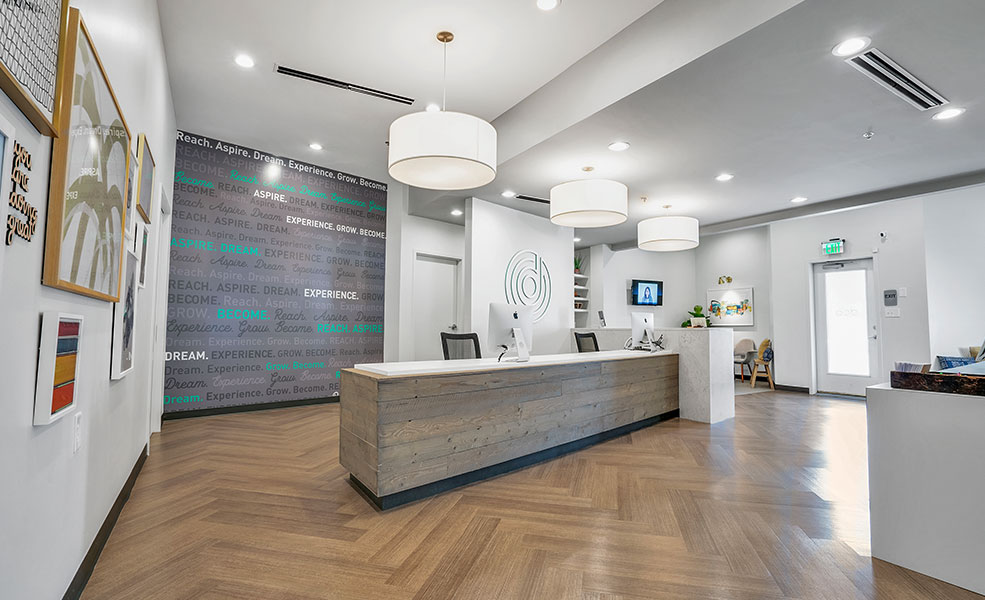
  2. Comfort: Our office is a warm place and our entire team is determined to brighten your day.  We have a beverage bar, complimentary Wifi, and semi-privacy in all clinical areas. During your visit, you may even forget that you are in a healthcare space.
  3. Convenience: We are will work with you to make your treatment process simple and convenient.  We have advanced technologies that can reduce the number of appointments.  We offer early morning, evening, and weekend hours as well.
  4. Esthetics: We offer the most advanced and esthetic orthodontic treatment options available. We are equally focused on the needs of young patients and adult patients.

We begin by listening.  It all starts with you.  These are the mantras of our practice.  We will constantly seek feedback from our patients and tirelessly work to continue to improve each day on the delivery of an exceptional experience.  Come and see what we are about.  It would be an honor to have you join the DCO Family.


[wbcr_snippet id="26047"]

What to Expect When Expecting (Braces and Invisalign Edition)

May 16th, 2016

ex·pec·ta·tion (Merriam-Webster) noun:  a belief that something will happen or is likely to happen.

Expectations.  They are so important!  “Does it hurt to get braces on?” It is a frequently asked question by patients of all ages.  I love to be the bearer of good news:  Of all of the medical/dental procedures a patient will have performed during the course of his or her lifetime, getting braces on will probably be among the easiest and most comfortable.  Getting braces put on is so comfortable and painless that many patients actually fall asleep during the procedure!

My wife Sarah and I are excited to be expecting our first child in September and we have access to a plethora of information to help us prepare, including the famous book What to Expect When You’re Expecting.  Fortunately, for patients, “what to expect” when getting braces on can be summarized in 4 easy steps:

  1. We clean your teeth with a spin brush
  2. We put several solutions on your teeth to help the adhesive work
  3. The doctor places and carefully positions each brace
  4. We shine a light on the brace to dry the glue

easy

The real work is handled by the doctor in advance of your visit to diagnose and plan the best way to align your teeth and bite.  After we wake you up from the nap you likely took while we put your braces on, we then explain the proper way to take care of your braces:

  1. We show you a special brushing technique to keep your braces clean
  2. We ask you to stay away from extremely hard or sticky foods
  3. We show you how to keep everything very comfortable

The process of getting started with Invisalign is even easier- imagine that!  The take home message is that getting braces or Invisalign is an extremely comfortable procedure.  Most orthodontists offer complimentary consultations to children and adults.  At the consultation, the orthodontist will illustrate the specifics of how you can benefit both functionally and esthetically from orthodontic treatment.


[wbcr_snippet id="26047"]